
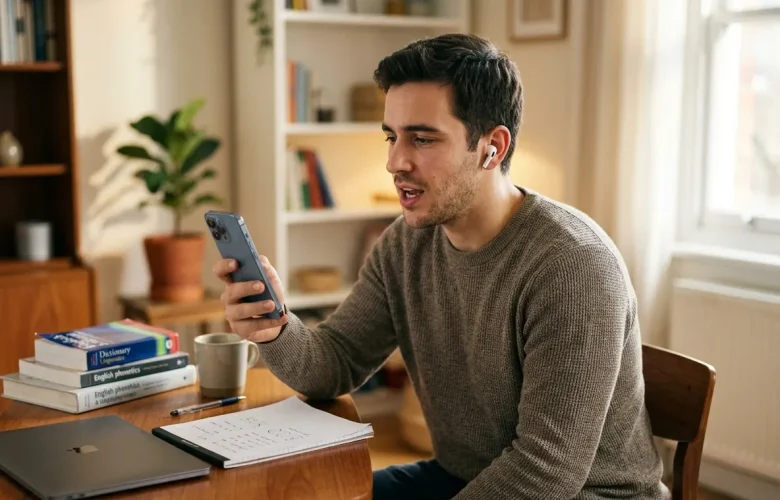
Stop whistling S sounds and nerf that lazy tongue. Master easy daily practice to improve speech clarity and unlock top-tier confident English.
Ever said “sip” but people heard “ship”?
Or maybe you’ve noticed your S sound whistles, your speech feels slightly slurred, or your accent makes certain English words harder to pronounce clearly.
You’re not alone.
For millions of English learners and even native speakers, the S vs SH pronunciation confusion is one of the trickiest speaking challenges. The good news? It’s completely fixable, without expensive speech therapy, without sounding robotic, and without spending years trying to “lose your accent.”
This guide will help you understand:
- How to fix s and sh confusion in English speech
- exercises to stop whistling s sound when speaking
- The difference between the s and sh mouth position
- How to improve clarity if you mumble or slur words
- and how apps like MySivi can help you practice naturally every day.
Whether you speak Hindi, Spanish, Tamil, Chinese, French, Arabic, or any other first language, this blog is designed for real people trying to speak clearer English in daily life, interviews, meetings, and conversations.
Why “S” and “SH” Sound So Confusing
Think about these words:
- sip → ship
- sue → shoe
- mass → mash
- see → she
Tiny sound difference. Huge meaning difference.
This happens because the tongue position and airflow for both sounds are very close. Your brain often maps English sounds using patterns from your native language, which creates pronunciation mix-ups.
If you grew up hearing stronger “sh” sounds in your mother tongue, your brain may automatically replace “s” with “sh.”
And if your speech muscles aren’t trained yet, your mouth may produce a soft, blurry sound somewhere in between.
That’s why many learners say:
“I know the word in my head… but my mouth says something else.”
And honestly? That’s normal.
Let’s be real for a second. Have you ever been listening to a voice note or a TikTok voiceover and realized your brain is actively fighting for its life, trying to tell the difference between an S and a SH sound?
One second someone is saying they are stressed, the next second it sounds like they are shressed. You’re not losing your mind, and your ears aren’t broken. It turns out that the letters S and SH are the ultimate catfish in the linguistic world.
If you’ve ever wondered why S and SH sound the same, you are dealing with a mix of wild tongue gymnastics, audio compression hate, and literal physics. Let’s unpack the phonetic difference between
S vs. SH: why your brain constantly mishears them.
1. The Tongue Gymnastics Are Too Close For Comfort
To understand sibilant sounds phonetically, we have to look at what your mouth is doing when you speak. Both of these noises are “friction sounds”—meaning you are forcing air through a tiny meat-tunnel in your mouth.
The “S” Sound: Your tongue presses tight against the roof of your mouth, right behind your front teeth. The gap is microscopic. Air shoots out like a high-pressure jet stream.
The “SH” Sound: Your tongue takes a single millimeter step backward and flattens out like a pancake. The air gets a bit more room to breathe, creating a wider, wind-like sound.
Because the physical gap between an S and an SH is literally the width of a fingernail, your tongue can easily miss the mark. One tiny lazy slip, and boom—you accidentally unlocked a temporary lisp or a slurry transition.
2. They Share the Exact Same DNA (Pure Air Vibes)
Think about letters like “B” or “Z.” When you say them, your vocal cords vibrate. They have “voice.”
But S and SH? They are completely unvoiced. They are just raw, unfiltered air scraping against your teeth. Because they use the same ingredients (just air and teeth), they sound like identical twins wearing different hats.
3. Technology Literally Nerfs the Sound
Why do they sound extra confusing over Zoom, phone calls, or cheap earbuds? Welcome to the nightmare of human speech frequencies.
In the audio world, these sharp sounds are called microphone sibilance. They live in the absolute highest frequency brackets that human ears can detect (usually between 4,000 Hz and 8,000 Hz).
When you stream video or audio, apps use “compression” to shrink the file size so your video doesn’t lag. The very first thing compression deletes? Those ultra-high frequencies. Tech literally strips away the high-end sparkle that separates an S from an SH. Once that data is gone, the two sounds look identical to your computer, and your brain just has to guess the word based on pure context clues.
At the end of the day, S and SH sound confusing because they live in the same high-frequency neighborhood and use the same mouth mechanics. When tech compresses your audio, it deletes the tiny differences between them.
So next time you mishear a word, don’t blame your ears. Blame physics, blame your phone speaker, and blame your lazy tongue.
The Real Difference Between S and SH Sounds
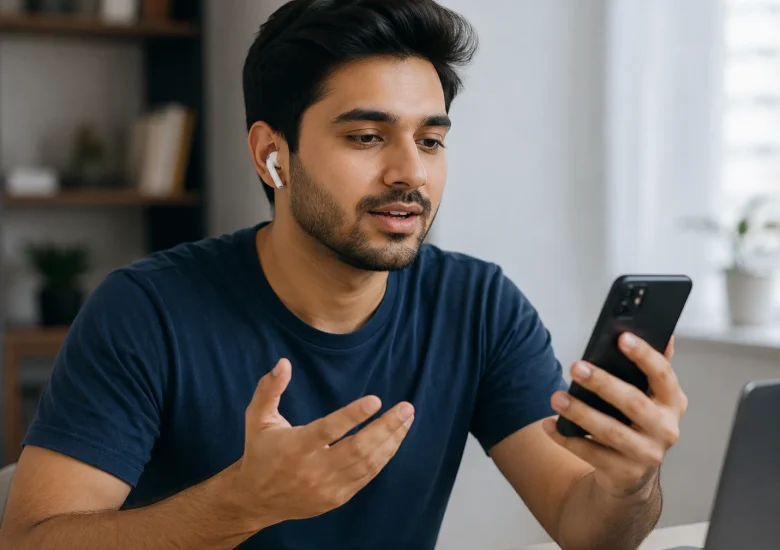
The /s/ Sound — Sharp & Forward
The /s/ sound is crisp, thin, and sharp.
Examples:
- snake
- city
- simple
- sister
Mouth Position for /s/
- The tongue stays close to the upper front teeth
- A narrow groove forms in the center
- Air shoots forward sharply
- Lips stay neutral
The sound feels like:
ssssssss
It’s focused and high-pitched.
The /ʃ/ Sound — Softer & Wider
The /sh/ sound is deeper and smoother.
Examples:
- shoe
- ship
- shadow
- chef
Mouth Position for /sh/
- Tongue pulls slightly backward
- The middle of the tongue lifts a bit
- Lips round slightly
- Air spreads wider
The sound feels like:
shhhhhhh
Like telling someone to stay quiet.
The Difference Between the S and SH Mouth Position
This is where most people finally understand the problem.
Sound | Tongue Position | Lip Shape | Airflow |
/s/ | Forward, near teeth | Neutral | Thin and sharp |
/sh/ | Slightly pulled back | Rounded | Wider and softer |
Quick Mirror Exercise
Stand in front of a mirror.
Say:
- sssss
- shhhhh
Notice:
- Your lips round more for SH
- Your tongue moves slightly backward
- SH feels warmer and wider
This tiny movement changes everything.
Why Your “S” Sound Whistles
One of the most searched pronunciation problems is:
“How do I stop my S sound from whistling?”
A whistling S usually happens when:
- too much air escapes
- Tongue placement is uneven
- Jaw tension blocks airflow
- The tongue groove becomes too narrow
Exercises to Stop Whistling S Sound When Speaking
Exercise 1: Soft Airflow Practice
Instead of pushing air aggressively, try a relaxed:
ssssssss
Keep it smooth, not explosive.
Exercise 2: Tongue Stability Drill
Place the sides of your tongue gently against your molars.
This prevents sideways airflow that causes the whistle effect.
Exercise 3: Record Yourself
Say:
- sun
- sister
- city
- science
Then compare your audio with native pronunciation using:
- dictionary audio
- YouTube pronunciation videos
- or apps like MySivi and speaking exercises.
Sip or Ship? The Viral Pronunciation Challenge
Here’s a fun test.
Read these aloud slowly:
- sip/ship
- see / she
- sock/shock
- sign/shine
- mass/mash
If they sound nearly identical, your tongue is probably staying in the same position for both sounds.
The goal is not perfection overnight.
The goal is to build muscle memory.
And yes — pronunciation is literally muscle training.
Practice Story: Train Your Mouth Naturally
This story is weird on purpose. That’s what makes it effective.
Read This Out Loud and Slowly
Sam owns a sandwich shop on the south side of town.
Sam’s sandwich shop isn’t a standard sandwich shop.
It’s a super silly sandwich shop.
Sam serves salami, sour cream, and spicy sausages with salsa.
Now repeat it 3 times.
This trains your brain to switch quickly between:
- sharp S sounds
- soft SH sounds
It feels awkward initially. Then, suddenly, your mouth starts adapting automatically.
That’s the breakthrough moment.
Daily Routine to Clear Up Slurred Speech and Mumble
A lot of people searching for how to fix s and sh confusion in English speech also struggle with:
- mumbling
- speaking too fast
- unclear words
- lazy pronunciation
Here’s a simple 15-minute routine.
5 Minutes — Sound Isolation
Repeat:
- sssss
- shhhhh
- s-sh-s-sh
Focus only on mouth movement.
5 Minutes — Minimal Pair Practice
Use:
- sip/ship
- see / she
- sore / shore
- sock/shock
Record yourself daily.
5 Minutes — Real Conversation Practice
Read:
- news articles
- subtitles
- Instagram captions
- or speak with AI conversation apps.
Consistency beats intensity.
How to Correct a Lateral Lisp as an Adult
A lateral lisp happens when air escapes from the sides of the tongue instead of the center.
This makes speech sound wet, slushy, or unclear.
The good news?
Adults can absolutely improve it.
- Fixing a lateral lisp as an adult isn’t about being broken; it’s just retraining a stubborn tongue that loves to spill air out the sides of your mouth.
- Traditional speech therapy for adults can feel clinical, but biohacking your lateral lisp exercises at home is all about that muscle-memory grind.
- To master how to cure a lisp, start with the “straw technique”: trap a straw between your front teeth and blast air straight through the center.
- Ditch the side-spill by practicing the butterfly position phonetics, lift the sides of your tongue to seal the back teeth while keeping the tip down.
- Turn your daily scroll into a workout by repeating high-intensity sibilant sound drills like “success,” “system,” and “situations” into your phone’s voice notes.
- Recording your speech helps your brain recognize the exact moment your tongue slips sideways, turning audio feedback into your ultimate speech coaching tool.
- Consistently moving your airflow from the sides to the center will permanently rewire your brain’s default articulation and speech patterns.
You don’t need perfect genetics for crisp pronunciation; you just need to teach your tongue to stop gatekeeping the air and let it ride the center lane.
Tips That Actually Help
- Keep the tongue sides touching the upper molars
- Slow down your speech
- Use mirror practice daily
- Practice sustained S sounds
- Record yourself consistently
Most adults improve within 4–8 weeks of focused practice.
Not instantly. But definitely progressively.
“My Accent Is the Problem…” — Actually, Not Completely
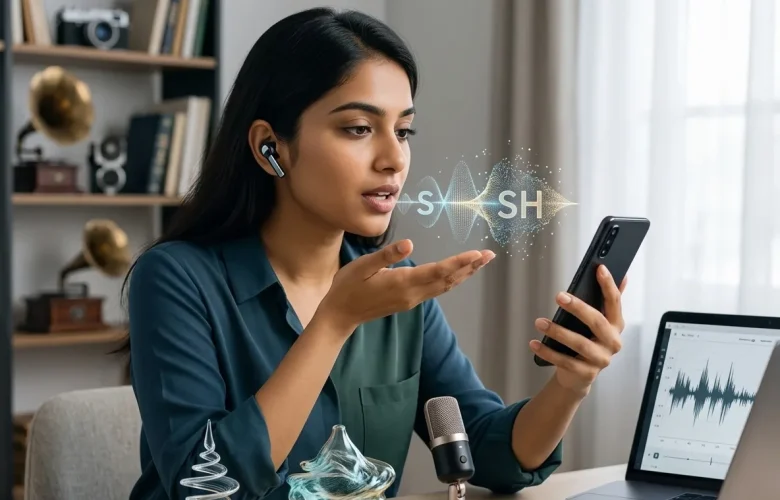
A lot of English learners say:
“Because of my native language, I can’t pronounce English clearly.”
That’s partially true — but not permanent.
Your accent is shaped by:
- childhood sound exposure
- tongue habits
- muscle memory
- listening patterns
But pronunciation can absolutely improve with training.
You do not need to sound American or British.
You only need:
- clear speech
- understandable pronunciation
- confidence while speaking
That’s the real goal.
English Pronunciation Exercises for Clear Communication at Work
Professional communication changes when pronunciation becomes clearer.
People stop saying:
- “Sorry?”
- “Can you repeat?”
- “What did you mean?”
And meetings become less stressful.
Workplace Practice Ideas
Practice these before meetings:
- “I’ll share the screen.”
- “Let’s discuss the solution.”
- “Should we schedule the session?”
Notice how many S and SH sounds appear naturally in workplace English.
How MySivi Helps Fix Pronunciation Naturally
One reason many learners struggle alone is simple:
They don’t consistently get speaking feedback.
That’s where the MySivi AI English Speaking App comes in handy.
Instead of memorizing random pronunciation rules, learners can:
- Practice speaking daily
- improve English fluency naturally
- Repeat difficult sounds
- build confidence in real conversations
- train pronunciation through consistent AI interaction
The best part?
You can practice privately without feeling judged.
Many learners improve faster because they finally start speaking every day instead of just watching videos.
You can also explore pronunciation tips and English fluency guides on the MySivi Blog.
The MySivi AI App is more than just an English-speaking tool; it’s your real-time pronunciation coach designed to fix muscle memory, reduce Mother Tongue Influence (MTI), and sharpen speech clarity in everyday conversations. Whether you confuse “S” and “SH” sounds or struggle with pronunciation confidence, the app gives instant AI-powered feedback that helps you sound clearer, smoother, and more natural while speaking English.
Real-Time Pronunciation Correction That Actually Works
Instant AI Feedback
Say “sea” instead of “she”? The AI catches it instantly. The app analyzes your speech in real time and highlights pronunciation mistakes the moment they happen, so you can correct them before they become a habit.
Smart Phoneme & Sound Detection
The system studies your articulation, airflow, and sound clarity to help you pronounce tricky sounds accurately. It trains your tongue placement for sharp “S” sounds and smoother “SH” sounds, making pronunciation practice more precise and effective.
Practice Freely with Arya AI Tutor
The built-in AI tutor, Arya, creates a judgment-free space where you can repeat difficult words, tongue twisters, and daily English conversations without feeling awkward. It’s like having a private speaking coach available 24/7.
Beat Mother Tongue Influence (MTI) Naturally
For many speakers of Hindi, Bengali, Spanish, and other regional languages, the difference between “S” and “SH” sounds isn’t always strong. That’s where MySivi AI helps.
Accent Training Personalized for You
The app identifies pronunciation patterns influenced by your native language and gives customized correction exercises to improve clarity faster.
Regional Language Support & Context Clarity
MySivi AI uses contextual examples, translations, and sound mapping in regional languages to make confusing word pairs easier to understand and remember.
From Practice Mode to Real Conversations
Simulated Calls & Real-Life Scenarios
Once you improve the sounds individually, the app moves you into mock interviews, workplace conversations, and everyday speaking situations where you can practice under real pressure.
Live Voice Chats with Learners
Use peer-to-peer speaking sessions to test whether people can clearly hear the difference between your “S” and “SH” sounds during actual conversations.
Expert Guidance for Faster Improvement
You can also join group classes or 1-on-1 expert sessions to get personalized feedback on jaw movement, lip shape, airflow, and pronunciation accuracy.
A Simple Daily Routine to Fix S vs SH Pronunciation
1. Isolate the Sounds
Spend 5 minutes daily practicing “S” and “SH” vocabulary using the pronunciation training modules inside the app.
2. Simulate Real Conversations
Open the “Talk to Arya” feature, choose a daily topic, and intentionally exaggerate your mouth movement and airflow while speaking.
3. Track Your Progress
Review your AI-generated transcripts, pronunciation scores, and speaking analytics daily to monitor improvements and build long-term speaking confidence.
If you want to sound clearer, reduce MTI, and improve English fluency faster, MySivi AI App turns daily speaking practice into a smart, interactive, and confidence-building experience.
The 30-Day Pronunciation Glow-Up Plan
Week 1
Focus only on hearing the difference:
- sip vs ship
- sue vs shoe
Week 2
Practice mouth positioning in front of a mirror.
Week 3
Use minimal pairs inside full sentences.
Week 4
Record natural conversation for 1 minute daily.
Compare Day 1 vs Day 30.
The improvement surprises most people.
Practice minimal pairs daily, like:
- sip/ship
- see / she
- sore / shore
Focus on tongue position and airflow. Mirror practice and self-recording help a lot.
Yes. Many adults improve pronunciation using daily articulation exercises, slow speech practice, and pronunciation apps. Severe cases may still benefit from a speech-language pathologist.
A whistling S usually happens because of excess airflow or incorrect tongue placement. Relaxing the airflow and stabilizing the tongue position often reduces the whistle.
Yes — especially when they encourage daily speaking practice. Apps like MySivi help learners build consistency, confidence, and clearer pronunciation through repeated conversation practice.
Signs Your Pronunciation Is Improving
You’ll notice:
- fewer repeated sentences
- clearer recordings
- stronger confidence
- better rhythm while speaking
- less mumbling
- easier communication at work
Progress feels slow daily.
But huge monthly.
Final Thoughts
Fixing S vs SH pronunciation is not about sounding “perfect.”
It’s about speaking clearly enough that your ideas shine without confusion.
Some days, your pronunciation will feel awkward.
Some days your tongue won’t cooperate.
That’s part of the process.
But every repetition trains your mouth a little more.
Every recording improves awareness.
Every speaking session builds confidence.
And eventually…
“sip” stops sounding like “ship.”
That’s when communication starts feeling effortless.

Sahil Gupta creates content around the MySivi app, helping learners improve their English speaking through simple, effective, and real-world methods, turning study stuff into simple, actually useful content. He shares English hacks, exam prep tips, and shows how to level up your speaking with MySivi’s AI-powered learning and real convo practice no fluff, just results


It’s really interesting to learn English
Thanks Rohan for your valuable feedback.